

Cart
0
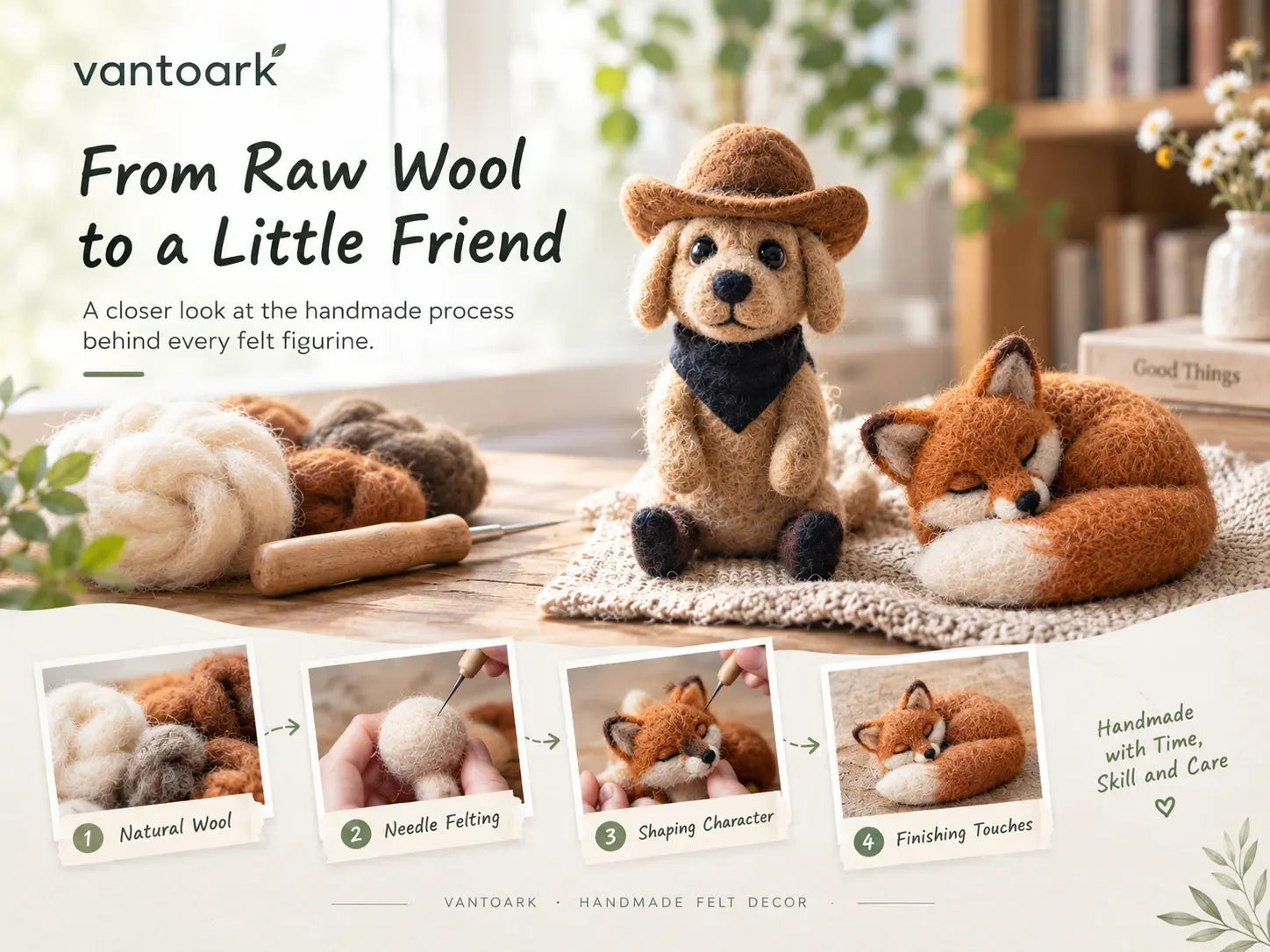
You've seen the finished figurine on your shelf, but you probably haven't seen how it got there. Understanding the process changes how you see the price, and the product. Let's walk through what actually happens before a piece reaches your home.
It Starts With Raw, Natural Wool
Every piece begins as raw wool, not a pre-made shape or mold. This is the first big difference from mass-produced decor. There's no factory template here, just natural fiber waiting to be shaped by hand.
The wool is carefully selected for quality before any shaping even begins. Poor-quality wool won't hold its shape or texture over time. This early step already separates a well-made piece from a cheap one.
Needle Felting: The Slow, Hands-On Part
The core technique behind our figurines is called needle felting. A special barbed needle is repeatedly poked into the wool, tangling the fibers together. This is what gives each piece its firm, sculpted shape.
This process is slow by nature, and that's not a downside. Each poke shapes the wool a tiny bit more, building form gradually rather than instantly. A single small figurine can take hours of this repetitive, careful work.
- No shortcuts exist here: Machines can't replicate this level of manual shaping.
- Every poke matters: Small adjustments determine the final shape and expression.
- Time equals detail: More time spent usually means finer, more refined features.
Shaping Character, Not Just Form
Once the basic shape is felted, the real personality starts to emerge. Small details, like a tilted ear or a subtle facial expression, get added by hand. This is where a figurine stops being generic and starts feeling like itself.
No two makers shape these details exactly the same way. That's exactly why handmade pieces have natural, slight variations between them. It's not inconsistency, it's proof that a real person made deliberate creative choices.
Finishing Touches That Make It Last
After shaping, each piece goes through a finishing process to secure loose fibers. This step matters for durability, not just appearance. A poorly finished piece may shed fibers or lose shape faster over time.
- Fiber checking: Loose or uneven areas get reinforced by hand.
- Shape testing: Pieces are checked to ensure they hold their form correctly.
- Final detailing: Small design elements are added last, once the shape is fully set.
This final stage is where quality control really happens. It's also why handmade pieces, done properly, tend to hold up far longer than mass-produced alternatives.
Why Knowing This Changes How You Shop
Once you understand this process, a higher price starts to make more sense. You're not paying for a shape stamped out by a machine in seconds. You're paying for hours of hands-on skill and attention.
This also explains why handmade pieces feel different to hold. The slight irregularities you notice aren't flaws, they're the fingerprints of the actual making process. That's a level of craftsmanship mass production simply can't offer.
Our Take on Sharing This Process
We think customers deserve to know what they're actually paying for. It's easy to compare prices without understanding what separates handmade from machine-made. Once you see the process, that comparison starts to look very different.
Every piece you buy represents real time, real skill, and real decisions made by hand. That's the story behind every figurine on your shelf, even if you never see it happen.
Next Time You Pick Up a Piece
Take a moment to notice the small, individual details on your figurine. Those aren't mistakes, they're evidence of the hours that went into making it. Understanding that process is what turns a simple purchase into something worth appreciating.
