

Cart
0
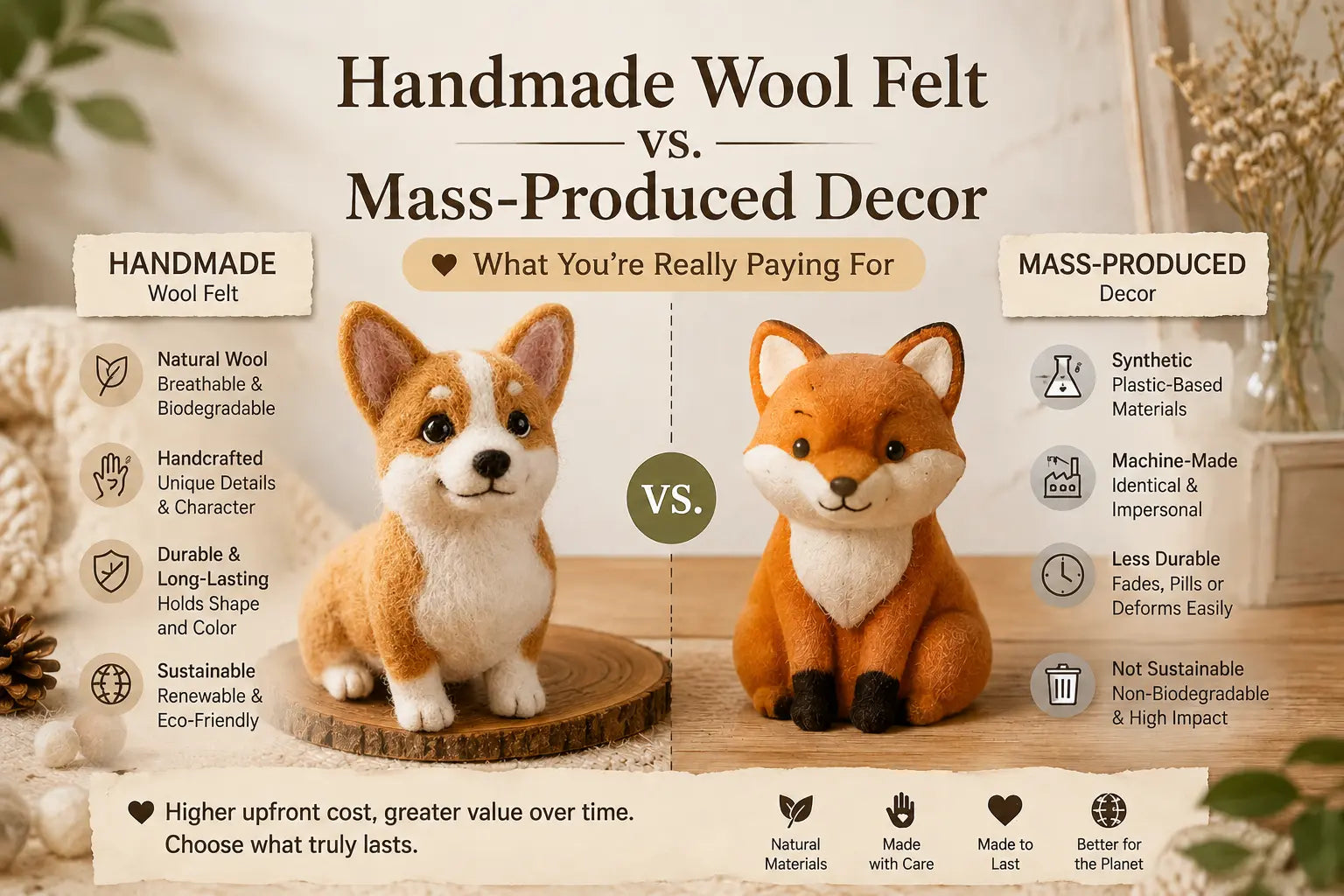
You've probably noticed the price difference between handmade wool felt and factory-made decor. It's fair to wonder what that extra cost actually buys you. Let's break down the real differences, so you can decide with confidence.
Material: Natural Wool vs. Synthetic Fillers
Most mass-produced figurines use synthetic fibers or plastic-based materials. They're cheap to produce, but they often look and feel artificial up close. Natural wool, on the other hand, has texture that synthetics simply can't fake.
This is the biggest difference you'll notice immediately. Wool has a soft, slightly irregular surface that catches light beautifully. Synthetic materials tend to look flat and overly uniform, even in photos.
- Wool felt: Breathable, biodegradable, and naturally textured.
- Synthetic felt: Often plastic-based, less breathable, and rarely biodegradable.
- Result: Wool ages gracefully, while synthetic pieces tend to look dated faster.
Craftsmanship: Handmade vs. Machine-Made
Machine-made decor is built for speed and consistency. Every piece looks identical, which sounds appealing until you realize it also feels impersonal. There's no individual character in something stamped out by a mold.
Handmade wool felt takes longer, sometimes hours per piece. That time shows up in small details, like shaping, stitching, and finishing touches. You're paying for craftsmanship, not just materials.
This is exactly why no two handmade figurines are ever perfectly identical. That's not a flaw in production. It's proof that a real person shaped that piece with their hands.
Durability: Which One Actually Lasts?
Cheap, synthetic decor often looks fine for the first few months. Then it starts pilling, fading, or losing its shape faster than expected. That's the trade-off you make for a lower upfront price.
Wool felt, when cared for properly, holds its shape and color for years. Natural fibers are simply more resilient than most people expect. A well-made wool piece can easily outlast several cheaper alternatives combined.
Sustainability: A Real Difference, Not Just Marketing
Synthetic materials are usually petroleum-based and don't break down naturally. They can sit in landfills for decades after they're thrown away. That's a real cost, even if it isn't listed on the price tag.
Natural wool is biodegradable and renewable, making it a genuinely lower-impact choice. If sustainability matters to you, this is where handmade wool truly earns its price. You're not just buying decor, you're making a small, deliberate choice.
Is the Extra Cost Worth It?
We understand handmade pieces cost more upfront than factory alternatives. But the comparison isn't really about price alone, it's about value over time. A cheaper piece that fades in months isn't actually the better deal.
Think about cost per year of enjoyment, not just the sticker price. A wool felt figurine you love for five years costs less, in real terms, than replacing a synthetic one twice. That math usually favors handmade, even before you factor in the emotional value.
Our Honest Perspective
We're obviously biased toward handmade wool, since it's what we make every day. But we'd rather you understand the real trade-offs than just take our word for it. Informed buyers make better decisions, and better decisions build long-term trust.
Mass-produced decor has its place for quick, low-cost needs. Handmade wool felt is for people who want something that feels intentional and lasts.
Making the Right Choice for You
If you want speed and the lowest possible price, mass-produced decor might fit. If you want texture, durability, and a piece with real character, handmade wool felt is worth the investment.
Either way, now you know exactly what you're paying for. That's the whole point of shopping with confidence.

