

Cart
0
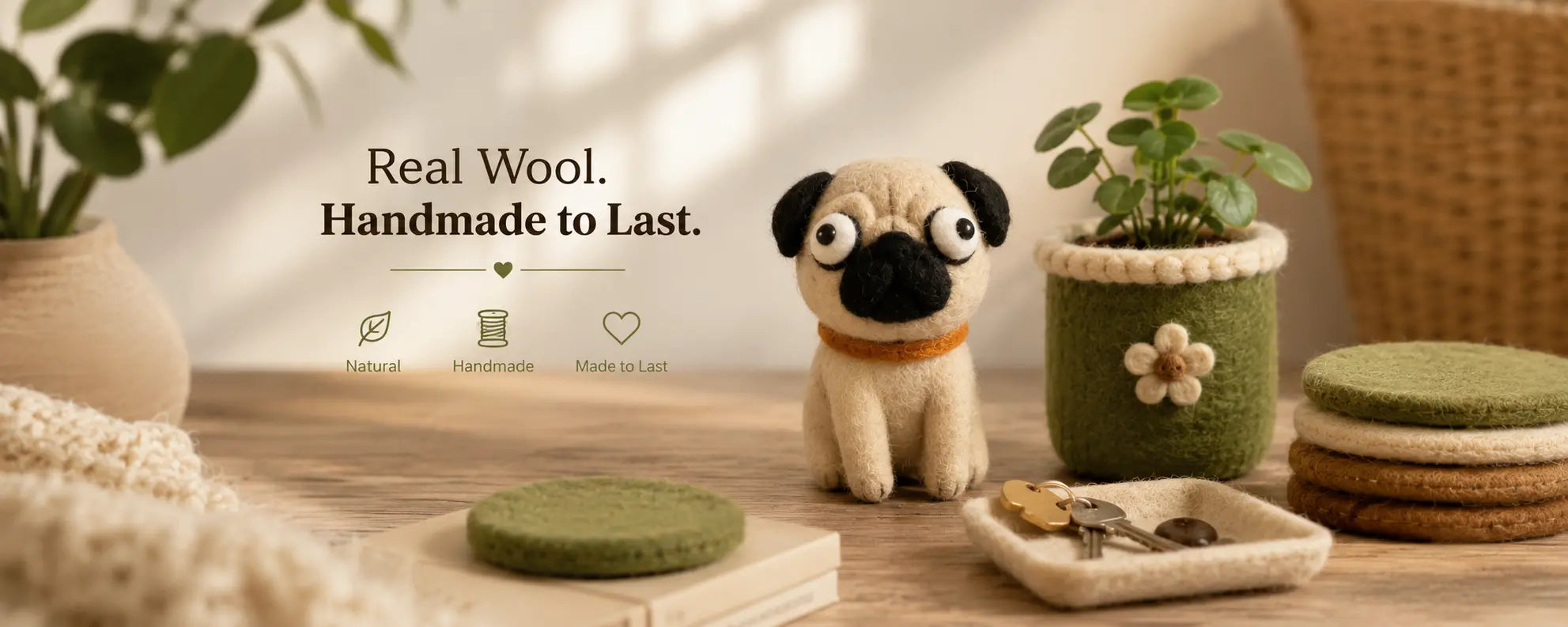
You've probably scrolled past dozens of "felt" products online — some for $5, others for $50. But price alone won't tell you what you're actually getting.
We want to walk you through what really separates handmade wool felt from cheaper alternatives. Once you know what to look for, you'll never shop for felt the same way again.
The Problem With Most "Felt" Products
Many items labeled as felt aren't made from wool at all. They're often pressed from polyester or acrylic fibers instead.
These synthetic versions look similar at first glance. But they behave very differently once you actually use them.
Common issues with synthetic felt include:
- Flattening quickly under regular use
- Trapping heat and moisture instead of breathing
- Shedding microplastics with every wash
- Losing shape and color within a single season
What You're Actually Paying For With Handmade Wool
When we felt wool by hand, we're not just shaping fiber. We're building density, structure, and longevity into every single piece.
Here's what your investment actually covers:
- Time — hand-felting takes hours, not minutes on an assembly line
- Skill — years of practice go into achieving consistent thickness and strength
- Material quality — we start with 100% natural wool, never blended fillers
- Attention to detail — every edge, seam, and surface is checked by hand
This is why a handmade wool piece often outlasts three or four cheaper replacements.
How This Translates to Your Everyday Life
Think about the last "cheap" home item you replaced within a year. Now imagine never having to think about that again.
With handmade wool felt, you get:
- Items that hold their shape after months of daily use
- Natural insulation, so coasters and pads actually protect surfaces
- A product that ages gracefully instead of degrading
- Something you won't feel guilty throwing away, since wool biodegrades naturally
Your purchase becomes an investment, not a disposable convenience.
Questions to Ask Before You Buy
Not every seller will tell you the full story behind their products. It's worth asking a few direct questions first.
Before adding anything to your cart, check:
- Is the wool content clearly listed, or vaguely described?
- Does the seller explain their felting process at all?
- Are the photos of real finished products, or just stock images?
If the answers feel evasive, trust that instinct. Transparency is usually a good sign of quality.
Simple Care Tips That Make a Big Difference
Wool felt rewards a little attention with years of extra life. None of this requires much effort on your part.
A few habits worth building:
- Spot-clean instead of machine washing whenever you can
- Keep pieces away from prolonged direct sunlight
- Reshape gently by hand if edges start to curl
- Store in a dry space to prevent moisture damage
Small steps like these keep your felt looking new far longer than you'd expect.
Choosing Quality Over Quantity
We believe fewer, better-made objects are worth more than a home full of things you'll replace next year. Handmade wool felt fits that philosophy naturally.
If you're ready to shop with more confidence, we invite you to browse pieces made the way felt was always meant to be made — by hand, with real wool, and real care.

